One wrong rubber component can trigger a recall, halt your assembly line, and expose your company to liability. Every OEM buyer carries that risk with each new supplier. A structured checklist cuts that risk and speeds up qualification. You evaluate experience, certifications, material expertise, quality systems, scalability, engineering support, cost structure, and references. Each area reveals whether a supplier can sustain OEM-level performance over years, not just one shipment. Use the checklist as a repeatable framework for any reliable automotive rubber parts supplier. OEM sourcing demands verified quality, not promises. The following criteria help you separate capable OEM partners from risky ones.
A supplier's history reveals true capability. You need a reliable automotive rubber parts supplier with proven OEM experience. Long-standing manufacturers have solved real production problems. They understand recall risks and line shutdowns. Experience also indicates financial stability. Surviving companies manage resources well. This stability reduces OEM sourcing risk.
Certifications separate capable manufacturers from unreliable ones. Verify credentials during formal qualification processes. Reputable suppliers hold recognized certificates. These documents prove their systems work daily. IATF 16949 stands as the global automotive standard. It includes FMEA, Control Plan, MSA, and PPAP requirements. ISO 9001:2015 forms the foundation but lacks automotive specifics. REACH and RoHS compliance matters for EU exports.
| Certification | What It Covers |
| IATF 16949:2016 | Automotive quality management: FMEA, Control Plan, MSA, PPAP |
| ISO 9001:2015 | General quality management foundation |
| REACH / RoHS | EU chemical substance restrictions |
These certifications help you identify reliable suppliers. Fuste implements the TS16949 quality management system. All products meet ASTM, SAE, DIN, and JIS standards. TS16949 governs the overall quality framework. ASTM and SAE set product-specific technical tests. DIN and JIS align with European and Asian systems. These credentials support OEM standards compliance across markets. Some OEM parts require specific material grades and tolerances.
Audited suppliers maintain documentation and follow improvement schedules. Consistent quality reduces warranty claims and recall exposure. This reliability strengthens your supply chain. Certified processes keep your OEM parts within tolerance across multiple model years. Always request current quality certificates and audit reports. Confirm expiration dates and scope details. Genuine OEM suppliers welcome these checks because their records pass scrutiny.
Standard catalogs rarely solve OEM sourcing problems. You need an OEM supplier who designs formulas and molds, not a factory pressing blanks.
Formulation begins with elastomer selection. Each product has needs. You evaluate durometer, tensile strength, and elongation. The compounder adds curatives, accelerators, antioxidants, carbon black, and processing oils. These ingredients set hardness, compression set, and aging resistance. OEM buyers request custom compounds for harsh environments.
Metal-bonded parts demand care. The metal insert needs cleaning, conversion coating, and adhesive primer. The assembly cures in a heated mold at 150–180°C under pressure. Vulcanization creates the chemical bond. Under-cured parts lose bond strength; over-cured parts turn brittle. Process control delivers consistent quality. Fuste offers complete solutions: formula design, mold making, and final production. That end-to-end control reduces integration risk.
Material selection drives cost and durability. A reliable automotive partner balances performance with price. Compare material quality across candidates.
Here are common elastomers and their typical roles:
| Material | Typical Applications |
| NR | Vibration mounts, couplings |
| EPDM | Grommets, gaiters, coolant hoses |
| NBR | Fuel hoses, oil seals |
| HNBR | Suspension isolators, engine dampers |
| Silicone | Turbo couplers, high-heat gaskets |
| ACM | Transmission seals, hot oil |
| CSM | Fuel, water, air hoses |
| ECO | Fuel bladders, diaphragms |
| FKM | Harsh-environment seals, O-rings |
Wiring harness grommets need waterproofing and flexibility. EPDM handles weather and dust, meeting IP67-style sealing. Fuel hoses need oil resistance; NBR or CSM fits. Choose by failure mode: compression set, hardening, chemical swelling, or abrasion.
Confirm your OEM parts match the make and model. Cross-check OEM part numbers. Exact fitment avoids installation damage and sealing gaps. These OEM parts must survive heat and fluid exposure. Some OEM parts require traceability to batch records. Quality control depends on material data and history. A consistent quality supplier reduces warranty claims and recall risk. Fuste produces OEM parts daily: grommets, gaskets, dust covers, waterproof seals, fuel hoses, water hoses, and air hoses. They use NR, EPDM, NBR, HNBR, silicone, ACM, CSM, ECO, and FKM. That experience supports material choices.
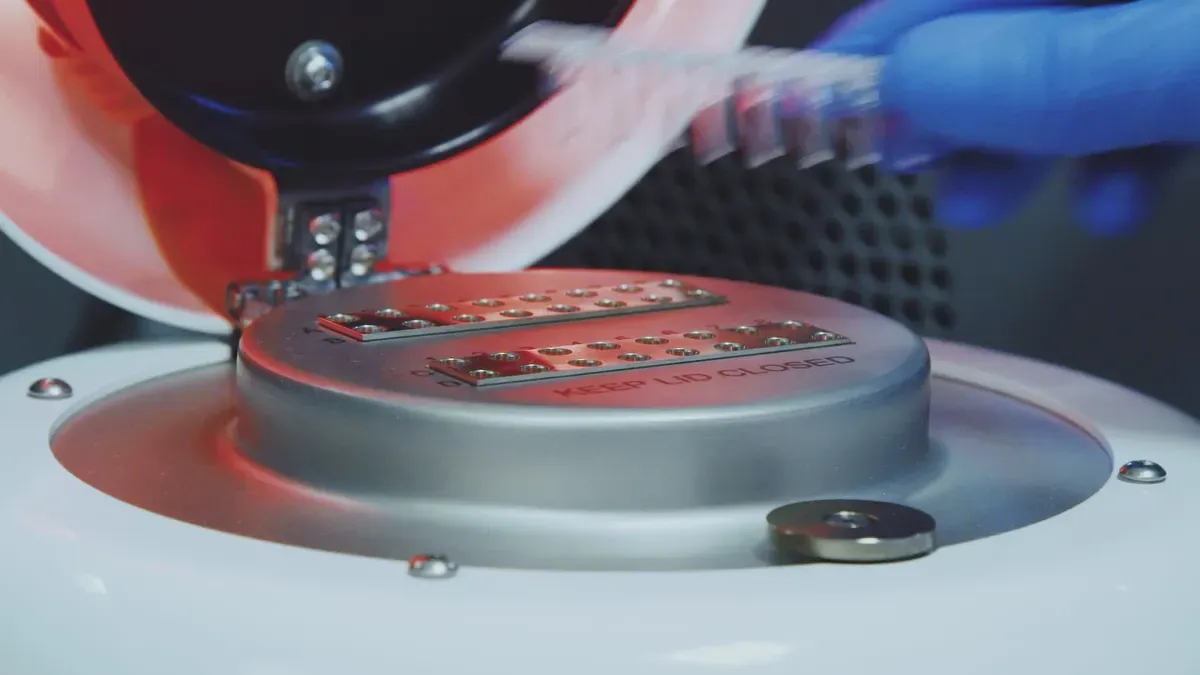
Quality assurance and quality consistency are non-negotiable for automotive rubber parts. A single out-of-spec batch can cause seal failure, fluid leaks, or electrical shorts. You need documented quality validation at every production stage.
Start with in-house testing. Your supplier should perform dimensional checks using calibrated instruments. Material performance testing must cover durometer, tensile strength, and compression set. For critical applications, request Mooney viscosity testing and moving die rheometer testing. These tests predict cure behavior and detect batch formulation shifts before parts reach your line.
Process control separates capable suppliers from weak ones. Evaluate how your supplier monitors internal mixing parameters such as rotor speed, mixing time, dump temperature, and ram pressure. Deviation in these parameters causes underdispersed fillers and batch-to-batch hardness variation. Press vulcanization requires tight control of temperature, cure time, and pressure. Under-cure produces low tensile strength and high compression set. Over-cure creates brittleness and hardness shift.
Modern suppliers use Statistical Process Control with real-time monitoring. Digital vision systems replace manual caliper sorting. Automated process monitoring replaces end-of-line inspections. Ask how operators gather SPC data on the production floor and what KPIs they track for raw material compound suppliers.
| Traditional Methods | Industry 4.0 Smart Manufacturing |
| Manual caliper sorting | High-speed digital vision systems |
| End-of-line inspections | Real-time automated process monitoring |
| Paper logbooks | Digital Statistical Process Control |
Dimensional consistency ties to published standards for O-ring dimensions and molded elastomer tolerances. Request controlled dimensions, not just a material name. Verify compatibility with the specific make, model, and year of your application. Confirm OEM part numbers where applicable. This step ensures exact fitment and prevents installation damage.
Traceable sourcing protects your brand during recalls. Every lot, component, and process step should be tracked. This tracking allows precise identification of the batch, machine, or supplier lot involved. A narrow recall scope saves money and protects your reputation.
Defect prevention beats defect detection. Apply poka-yoke at molding, bonding, and inspection stages. Quality is built into the process rather than inspected in later.
In rubber and rubber-to-metal components, defects such as bonding failure and dimensional variation often originate from process gaps rather than operator mistakes. Applying poka-yoke at the molding, bonding, and inspection stages significantly reduces rejections — because quality is built into the process rather than inspected in later.
Real-time SPC with IIoT sensors catches parameter drift while still correctable. Barcode scanning verifies each part against work orders and triggers alerts on mismatch. These mechanisms force compliance at the point of work.
| Defect Prevention Mechanism | Effect on Returns |
| Real-time SPC & Analytics | Prevents whole batches from going bad |
| Poka-Yoke (lockout/verification) | Reduces assembly and labeling errors |
| Process Traceability | Narrows recall scope precisely |
| Proactive Quality Approach | Fewer returns, higher customer satisfaction |
Fuste applies these principles through TS16949 systems and full manufacturing documentation. Their factory-level quality controls support genuine OEM standards across electrical, engine, and chassis systems. This reliability gives you confidence in long-term partnership.
Your OEM production schedule depends on supplier capacity. A supplier can have enough machine hours and still miss your requirements. Labor availability changes. Tooling becomes a constraint. Materials arrive late. Another customer's launch competes for the same resources. You need a partner who ramps capacity up or down with actual demand. That flexibility aligns output with cyclical automotive demand and reduces schedule disruption for OEM assembly plants. A forecast that looked manageable six months ago can look very different when actual orders arrive.
Ask for documented production volumes. A capable supplier runs multi-year OEM programs at high annual volumes. Standard lead time matters too. A competitive standard lead time for custom molded rubber parts requires disciplined planning and a stocked raw material inventory. Quality consistency matters for every shipment. Confirm process capability and defect-rate performance. These quality metrics support consistent delivery reliability for your OEM parts. These OEM parts must meet your specifications.
Engineering collaboration reduces integration risk. Your supplier should provide design assistance, prototyping, and problem-solving support. Early involvement catches connector collisions with chassis members. Synchronized 3D routing returns exact wire lengths. This prevents harnesses from being too short or too long. Bidirectional ECAD-MCAD updates let routing follow chassis cavities and engine compartments. Live shared data across design domains reduces version mismatches and manual handoffs.
Strong engineering support covers electrical, engine, and chassis systems. It addresses overconstrained designs and late discoveries. Early tolerance allocation and load-path analysis keep systems manufacturable at volume. Fuste applies this approach across its OEM parts production. The company runs dedicated molding workshops. This setup delivers factory-level quality and protects your OEM build. You gain reliable OEM parts across every program. That quality keeps your line running.
Unit price alone misleads your sourcing decision. You must analyze total cost of ownership across the full product lifecycle. Factor in tooling amortization, logistics, defect rates, maintenance frequency, and warranty terms. A low unit price often hides expensive field failures and production downtime.
Evaluate your supplier's process capability. A partner with certified systems and proven quality controls delivers meaningful total cost of ownership savings over time. That savings offsets a higher unit price. Key benchmarks to audit include process capability, defect rate, and on-time delivery. These metrics separate reliable suppliers from those who cut corners. A reputable supplier invests in engineering support and batch consistency. That investment protects your OEM production schedule.
Request references from existing OEM customers. Ask specific questions about defect rates, delivery performance, and problem resolution. Verify these references independently. A vetted supplier network provides sourcing transparency and reduces your qualification burden.
Reputable suppliers offer product warranties and stand behind quality consistency. They welcome audits and provide full documentation. Fuste exports to Europe, America, the Middle East, Southeast Asia, and Africa. This global footprint demonstrates a verifiable track record across diverse regulatory environments. Their customer base confirms reliability across automotive electrical, engine, and chassis systems. You gain confidence when a supplier's history supports exact fitment and long-term performance. Trusted suppliers earn partnerships through consistent quality, not sales promises.
You now hold a repeatable qualification framework. Certifications, material expertise, quality assurance, scalability, engineering support, cost value, and references together determine reliability. Apply this checklist to every potential partner. A reliable automotive rubber parts supplier meets each criterion with documented proof.
Fuste exemplifies trusted suppliers who satisfy these standards. Their TS16949 systems, material range, and global export record support your OEM needs. You can source OEM parts with confidence. Request a quote, sample, or audit support today. Contact yw@fuste.com.cn, sales2@fuste.com.cn, or sales1@fuste.com.cn to start. Strong OEM partnerships begin with verified quality. Your next OEM parts order deserves a supplier who delivers consistent quality across every shipment. Choose OEM parts from a partner who earns your trust through action, not words.
Request current certificates and audit reports. Check the scope and expiration date. Confirm IATF 16949 or TS16949 compliance. Ask for PPAP documentation. A genuine supplier welcomes these checks. Their records pass scrutiny.
NBR, CSM, or FKM resists petroleum products in fuel hoses. FKM handles the harshest chemical environments. EPDM resists coolant and weather, not oils. Match the material to fluid exposure and temperature range. Your supplier should recommend based on failure mode.
Ask for documented production volumes and standard lead times. Verify process capability, defect rates, and on-time delivery performance. A supplier running multi-year OEM programs demonstrates the scalability you need. Fuste operates a substantial manufacturing facility with an experienced workforce.
Usually, yes. Standard catalogs rarely match your application. OEM parts demand specific formulas and mold designs. A capable supplier provides complete solutions: formula design, mold making, and final production. End-to-end control reduces integration risk. Fuste's process covers every step from compounding to vulcanization.
Request references from existing OEM customers. Ask about defect rates, delivery performance, and problem resolution. Verify these claims independently. Confirm warranty terms in writing. Fuste exports to Europe, America, the Middle East, Southeast Asia, and Africa. Their customer base proves a verifiable global track record.




 serviço on-line


